Fils d'information
(→Spinoza.fr) |
(→Spinoza.fr) |
||
| Ligne 43 : | Ligne 43 : | ||
| + | <rss desc=off title=off number=10>http://cogitations.free.fr/?feed=rss2</rss> | ||
[[Catégorie:Ressources]] | [[Catégorie:Ressources]] | ||
Version actuelle en date du 17 janvier 2017 à 10:17
Cette page présente les dernières publications présentes sur des sites intéressants pour la pensée de Spinoza.
Sommaire |
Google actualités
Vivre Spinoza
Articles récents
Commentaires récents
La philosophie au sens large
Articles récents
HyperSpinoza
Revue Multitudes
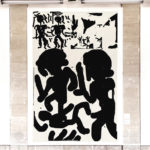
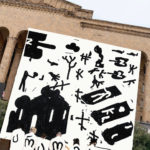
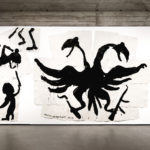
Consulter les œuvres d’Alisa Yoffe J’ai toujours eu envie de changer le mondeContinuer la lecture de J’ai toujours eu envie de changer le monde ]]>Alisa Yoffe en noir sur blancContinuer la lecture de Alisa Yoffe en noir sur blanc ]]>Le droit d’auteur ne sauvera pas les artistesContinuer la lecture de Le droit d’auteur ne sauvera pas les artistes ]]>Répression culturelle en Serbie Zajednica Umetnosti i KultureContinuer la lecture de Répression culturelle en SerbieZajednica Umetnosti i Kulture ]]> De la décolonisation des savoirs Un impossible impératif ?Decolonizing Knowledge An Impossible Injunction? This article examines the decolonization of knowledge from a political rather than an epistemological perspective. It argues that the coloniality of knowledge stems not from a lack of alternative knowledges, but from a repressive academic infrastructure that sustains Western hegemony. The global university functions as a “concierge” of coloniality through institutional mechanisms (rankings, scientific journals, equivalence systems) that impose the epistemologies of the Global North while marginalizing those of the Global South. The article emphasizes that alternative knowledges have always existed in the South, but that their circulation has been systematically obstructed by the “imperiality of knowledge.” It proposes understanding decolonization as a political project aimed at dismantling this infrastructure and fostering a form of “epistemic marronage” enabling the regeneration of post-imperial thought.]]>Lecture cinéthique ou « comforting gaze » ? Une défense du cinéma et des séries de fictionCinethic Reading or Comforting Gaze? A Defense of Fictional Cinema and Series This text critiques Nathan Martin Escamilla’s article entitled “Le comforting gaze,” in which three recent popular films (Anora, Bird, and Emilia Pérez) are framed as part of a single bourgeois apparatus of ideological comfort. The article first challenges the social determinism of the habitus and the generic purism characteristic of the author’s stance, highlighting its proximity to the Soviet socialist realist theory of bourgeois escapist art. Having refuted the flaws of such an essentialist symptomatic reading and its auteurist bias, the study proposes a reassessment of these works. It demonstrates how serial art and popular entertainment, far from anesthetizing the audience, function as instruments of moral clarification to combat hermeneutic injustice and nurture democratic conversation. ]]>Néanmoins Antonio NegriContinuer la lecture de Néanmoins Antonio Negri ]]>Réinventer la démocratie dans la crise de l’EmpireRe-inventing Democracy in the Crisis of Empire This article proposes a critical rereading of Antonio Negri’s legacy in light of the contemporary crisis of Empire. It argues that the classical tension between the interior and exterior of Empire points to a deeper ambivalence regarding the relationship between democracy, the common, and communism. While the discovery of the common opens in Negri a radically immanent perspective—grounded in the cooperation of singularities and the constituent power of struggles—the recurrent appeal to communism tends to reintroduce a form of transcendence, teleology, and messianic expectation. The current crisis of Empire does not herald an emancipatory overcoming, but rather the rise of authoritarian dynamics seeking to restore forms of sovereignty, hierarchy, and closure. ]]>Politique de l’intelligence et intelligence de la politiquePolitics of Intelligence and Intelligence of Politics This article reflects a longstanding engagement with Toni Negri, who, like Marx, will remain a master in spite of himself or without his full knowledge. The discussion focuses in particular on what is a common trait among all the generations that considered themselves revolutionary from 1965 to 2020: a politics of intelligence that does not necessarily go hand in hand with true political intelligence.]]> |
Amis de Spinoza
| Error: It's not possible to get http://www.spinozaeopera.net/rss... |
Spinoza.fr
Articles récents
| Error: It's not possible to get http://spinoza.fr/feed.php... |
Commentaires récents
| Error: It's not possible to get http://spinoza.fr/comments/feed/... |

